Nootropic Peptides
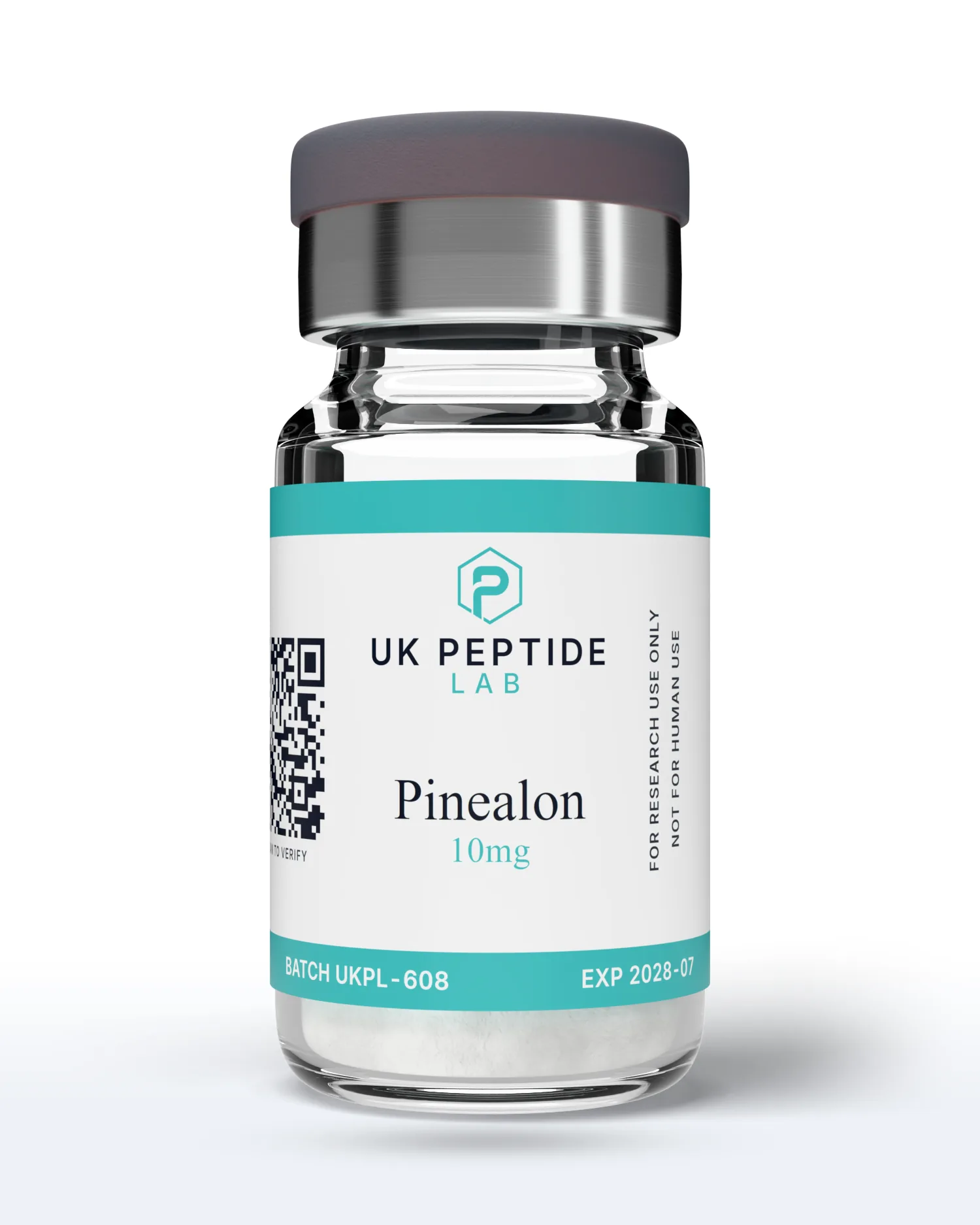
Pinealon
10mg
Glu-Asp-Arg tripeptide bioregulator. Neuroprotection and gene-expression research.
98.8% purity · Third-party tested · Batch UKPL-608 · View certificate
- Same-day dispatch before 3pm, Mon to Fri
- Add £39.01 more for free UK delivery
- Cold-chain shipping. Always. Dry-cold pack, Royal Mail Tracked 24
- Lost, damaged or wrong? Replaced free if you tell us within 48 hours.
- Research use only. For in-vitro laboratory research. Not for use in humans or animals, or in food, drugs or diagnostics. Not evaluated by the MHRA or FDA. The buyer is responsible for handling and regulatory compliance.
Bulk Pricing
Counted across your basket, any mix of products.
| Vials in basket | Discount | Per vial |
|---|---|---|
| 1 | None | £29.99 |
| 3-4 | 5% | £28.49 |
| 5-9 | 8% | £27.59 |
| 10-50 | 12% | £26.39 |
Bacteriostatic Water 10ml
Required to reconstitute lyophilised peptides.
What is Pinealon?
Pinealon is the synthetic tripeptide Glu-Asp-Arg, also sold as EDR peptide. It is one of the short peptide bioregulators developed by the Khavinson group at the St Petersburg Institute of Bioregulation and Gerontology. Each Pinealon 10mg vial holds white lyophilised powder.
Full description
In that programme each short peptide is linked to a tissue, and Pinealon is the one linked to brain tissue. The group proposes that peptides this small enter cells and bind histone proteins or nucleic acids, changing which genes are expressed. At 418.4 g/mol, EDR is small enough for that idea to be tested directly.
The literature is small, preclinical and comes mostly from one research group. Independent replication is limited.
Pinealon Research Applications
- Proposed mechanism: a 2021 review links EDR to MAPK/ERK signalling, caspase-3, p53 and the antioxidant enzymes SOD2 and GPX1 (Khavinson et al., Molecules, 2021).
- Neuronal ageing model: in cortical neurons made from elderly donors' skin fibroblasts, EDR reduced oxidative DNA damage and increased dendritic branching (Kraskovskaya et al., Int J Mol Sci, 2024).
- What it did not change: in the same model, the tripeptides had no effect on mitochondrial or lysosomal activity or on p16 levels.
Study details
Typical uses are neuronal culture models of oxidative stress and ageing, and gene-expression or protein-synthesis assays that test the bioregulator hypothesis. Because most data come from one school, independent replication is one of the most useful things a laboratory can do with it.
Pinealon vs Semax
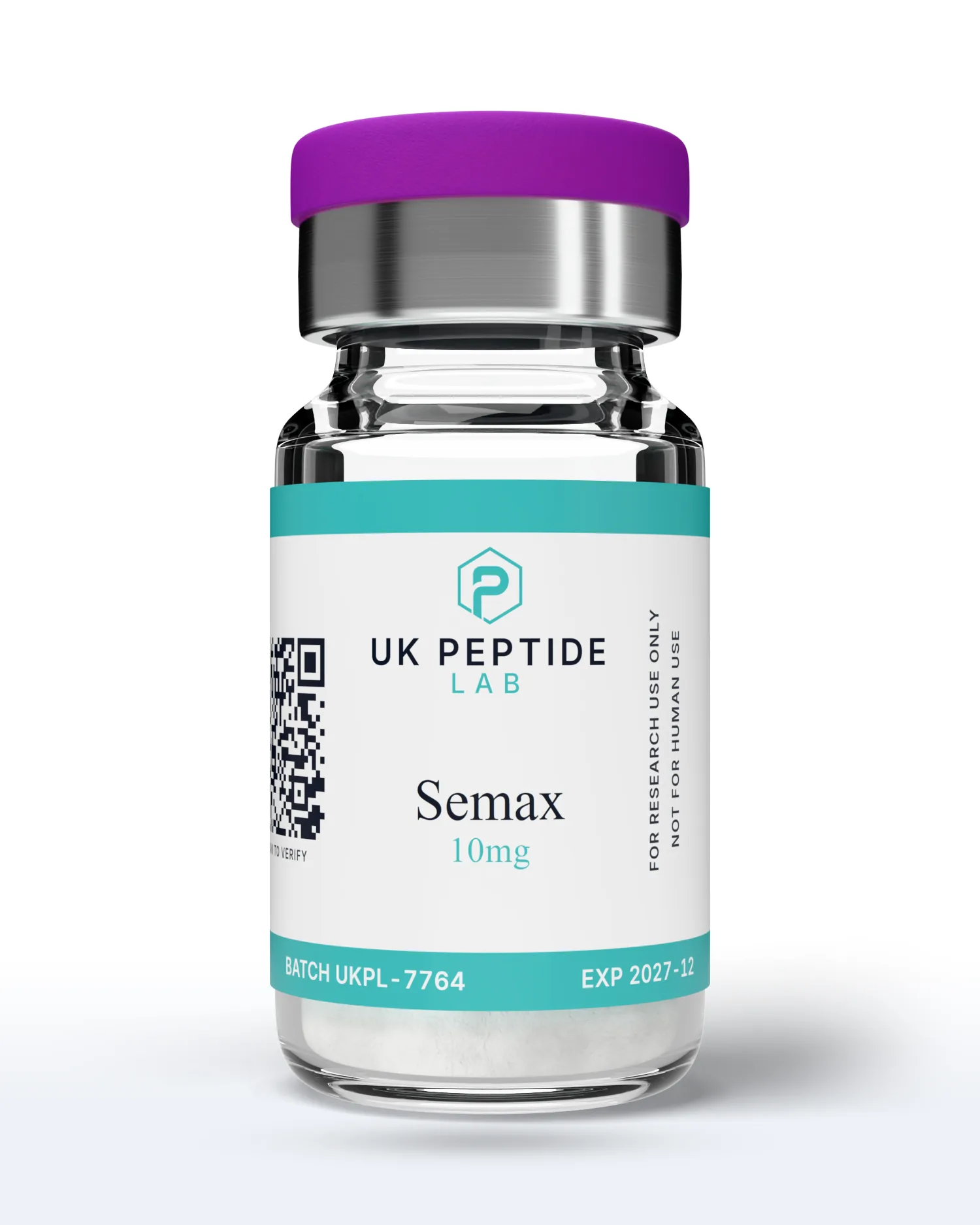
Both are Russian-origin research neuropeptides, but their evidence bases differ in kind. Semax is a heptapeptide analogue of ACTH(4-10), built as ACTH(4-7) plus Pro-Gly-Pro. Its preclinical literature on neurotrophin signalling, including BDNF and trkB in rat brain, comes from more than one laboratory. Pinealon is a three-residue bioregulator with a smaller, mostly single-group literature built around a proposed gene-expression mechanism. For Semax the open question is translation from animal findings. For Pinealon the mechanism itself still awaits independent replication.
Research Overview
The Khavinson programme has produced a series of di-, tri- and tetrapeptides. Each is proposed to regulate gene expression in the tissue its parent extract came from. EDR is the brain-linked member, alongside peptides such as KED and the tetrapeptide AEDG (Epithalon).
The 2021 review in Molecules sets out the proposed mechanism. EDR is assumed to enter cells and bind histones or ribonucleic acids. The review links that binding to changes in MAPK/ERK signalling, in pro-apoptotic proteins such as caspase-3 and p53, and in antioxidant enzymes such as SOD2 and GPX1. The authors frame this in terms of Alzheimer's disease models. It remains a hypothesis from the group that proposed it.
The 2024 study used a newer human cell model: dermal fibroblasts from elderly donors converted into cortical neurons. EDR, KED and AEDG all increased the number of primary dendrites and total dendrite length. EDR also lowered oxidative DNA damage. None of the tripeptides changed mitochondrial or lysosomal activity or p16 protein levels.
Pinealon is not a licensed medicine in the United Kingdom or anywhere else.
Product Specifications
- Molecular Formula
- C₁₅H₂₆N₆O₈
- Molecular Weight
- 418.4 g/mol
- CAS Number
- 175175-23-2
- Sequence
- Glu-Asp-Arg (EDR tripeptide)
- Purity
- 98.8% (RP-HPLC)
- Batch
- UKPL-608
- Storage
- -20°C lyophilised, 2-8°C reconstituted
- Appearance
- White lyophilised powder
- Form
- Lyophilised powder
Certificate of Analysis
Third-party tested
- Batch
- UKPL-608
- Purity
- 98.8%
- Specification
- ≥98.0%
- Method
- RP-HPLC
- Tested
- Jul 2026
Need the certificate for an earlier batch? Request an older CoA
Storage and Reconstitution
Keep sealed vials at -20°C, away from light and moisture. After reconstitution, keep the solution at 2-8°C and use it within 4 weeks. For longer storage, freeze single-use aliquots at -20°C and avoid repeated freeze-thaw cycles.
Vials are sold on their own, without bacteriostatic water for mixing or other supplies.
How to reconstitute and handle
Bring the vial to room temperature and swab both stoppers with alcohol. Add bacteriostatic water slowly down the inside wall of the vial and swirl gently. Pinealon is highly water-soluble and dissolves almost at once, giving a clear, colourless solution. A three-residue peptide has no folded structure to damage, so the risk is hydrolysis in standing solution. Make up only what the experiment needs, refrigerate promptly and label the vial with the date.
- Work under aseptic conditions with sterile syringes and alcohol-swabbed stoppers, in a laminar flow hood where available.
- Split reconstituted stock into single-use aliquots, label each with the date, and avoid repeated freeze-thaw cycles.
For the full method, see the peptide reconstitution guide and the reconstitution calculator.
Research References
- EDR Peptide: Possible Mechanism of Gene Expression and Protein Synthesis Regulation Involved in the Pathogenesis of Alzheimer's Disease (Khavinson et al., Molecules, 2021)
- Short Peptides Protect Fibroblast-Derived Induced Neurons from Age-Related Changes (Kraskovskaya et al., Int J Mol Sci, 2024)
Published research on Pinealon is indexed on PubMed.
Pinealon Price (UK)
Pinealon 10mg is for sale at £29.99 per vial, supplied from stock in the UK with a published third-party HPLC certificate. UK delivery is £4.50 by Royal Mail Tracked 24, free over £69.
| Vial | Price | Cost per mg | Availability |
|---|---|---|---|
| Pinealon 10mgThis page | £29.99 | £3.00 | In stock |
Prices are in GBP per vial and match the basket. See the FAQ for delivery and payment options, and quality & testing for how each batch is checked.
Frequently Asked Questions
What is a 'peptide bioregulator'?
It is the Khavinson group's term for very short peptides, usually two to four residues, proposed to regulate gene expression in a particular tissue. Pinealon, the Glu-Asp-Arg tripeptide, is the member linked to brain tissue. The term describes a research hypothesis from largely one group, not an established pharmacological class.
How is Pinealon proposed to work?
The proposed mechanism is epigenetic and unproven. A 2021 review by Khavinson and colleagues suggests EDR enters cells, binds histones or RNA, and shifts genes and proteins such as caspase-3, p53, SOD2 and GPX1. A 2024 cell study found EDR reduced oxidative DNA damage in neurons derived from elderly donors' fibroblasts. Both come from the same research school.
Are there human studies of Pinealon?
No randomised controlled trial of Pinealon has been published. The indexed literature is small, comes mostly from one research group, and consists largely of cell and small animal studies without independent replication. No established effect in humans is claimed here.
Is Pinealon legal to buy in the UK?
Yes, as a research chemical for in-vitro laboratory use only. Pinealon is not a licensed medicine in the UK and is not supplied for human consumption, veterinary use or any therapeutic purpose. Buyers must be 18 or over and confirm research-only use at checkout.
What is in a Pinealon vial and how should it be stored?
Each vial holds 10mg of Pinealon (Glu-Asp-Arg) as white lyophilised powder, batch UKPL-608. Keep sealed vials at -20°C, away from light and moisture. Reconstitute with bacteriostatic water and keep the solution at 2-8°C.
Where can I buy Pinealon in the UK?
UK Peptide Lab sells Pinealon 10mg from UK stock, batch UKPL-608. Orders placed before 3pm UK time on a working day are dispatched the same day, and UK Royal Mail Tracked delivery is free over £69.
Is your Pinealon independently tested?
Yes. Batch UKPL-608 has a third-party certificate reporting 98.8% purity by RP-HPLC. The full report is published on the product page, not supplied on request. The expected mass for Glu-Asp-Arg is 418.4 g/mol.
What is Pinealon used for in research?
Pinealon is used to test the Khavinson peptide bioregulator hypothesis. Typical work covers neuronal culture models of ageing and oxidative stress, and assays of gene expression and protein synthesis. Replication studies are useful too, because the literature is small and mostly from one group.
Related Products